

Florida Storm Preparation for Seniors:
How to Get Ahead of the Stress Before a Hurricane Hits
Quick take: Storm preparation in Florida looks different when you’re caring for an older loved one. Beyond stocking up on water and batteries, families need a plan for medications, mobility, power outages, and what happens if routines are disrupted for days. This guide walks through practical ways to prepare ahead of time and explains how AstraCare can help reduce stress with dependable in-home support before and after a storm.
In Florida, storm season is part of life. But when you’re caring for an aging parent, a spouse with health concerns, or a loved one who depends on daily support, a storm is more than an inconvenience. It can quickly become a serious safety issue.
Power outages, pharmacy closures, transportation disruptions, evacuation decisions, and changes to routine can create a lot of uncertainty, especially for older adults who rely on medications, mobility equipment, or regular help at home.
The good news is this: storm preparation does not have to be frantic. The best time to prepare is before a storm is on the radar, while everyone is calm and clear-headed.
At AstraCare, we help families think through the details that are easy to miss, especially when an older loved one’s safety, comfort, and medical needs are part of the equation. Here’s how to prepare well, and how in-home support can make storm season far less overwhelming.
Why Storm Preparation Matters More for Seniors
Storm prep looks different when you’re planning for an older adult.
A senior may not be able to stand in long store lines, carry heavy supplies, or quickly relocate if conditions change. Some rely on refrigerated medications, oxygen, mobility devices, or regular caregiver support. Others may become anxious or disoriented when routines are disrupted, especially if they are living with memory issues or cognitive decline.
That means storm preparation is not just about flashlights and bottled water. It’s about protecting health, preserving stability, and making sure your loved one has what they need if the power goes out, roads flood, or an evacuation becomes necessary.
1. Start With the Medical Essentials, Not the Grocery List
Before you worry about batteries or canned soup, make sure your loved one’s health needs are covered.
Storm prep checklist for medications and care needs:
- Keep at least a 2-week supply of prescription medications on hand whenever possible
- Save an up-to-date list of:
- medications and dosages
- prescribing physicians
- allergies
- medical conditions
- pharmacy contact information
- insurance cards and ID
- If your loved one uses insulin or other medications that need refrigeration, make a plan for how they will be stored if the power goes out
- Gather extra medical supplies such as:
- incontinence products
- wound care supplies
- gloves
- nutritional drinks
- hearing aid batteries
- oxygen or respiratory supplies
- Keep copies of discharge paperwork, physician instructions, and emergency contacts in a waterproof folder
For families in Broward County and Palm Beach County, this is especially important because once a storm is approaching, pharmacies can become crowded, supplies can run low, and travel can become difficult. Florida also allows emergency prescription refills in certain declared emergency situations, but waiting until the last minute is risky.
2. Build a Storm Kit Around Your Loved One’s Actual Daily Routine
A lot of emergency lists are generic. Seniors need a more personalized version.
Think through a normal 3 to 7 days at home and ask: What does this person need to stay safe, clean, comfortable, nourished, and calm if services are disrupted?
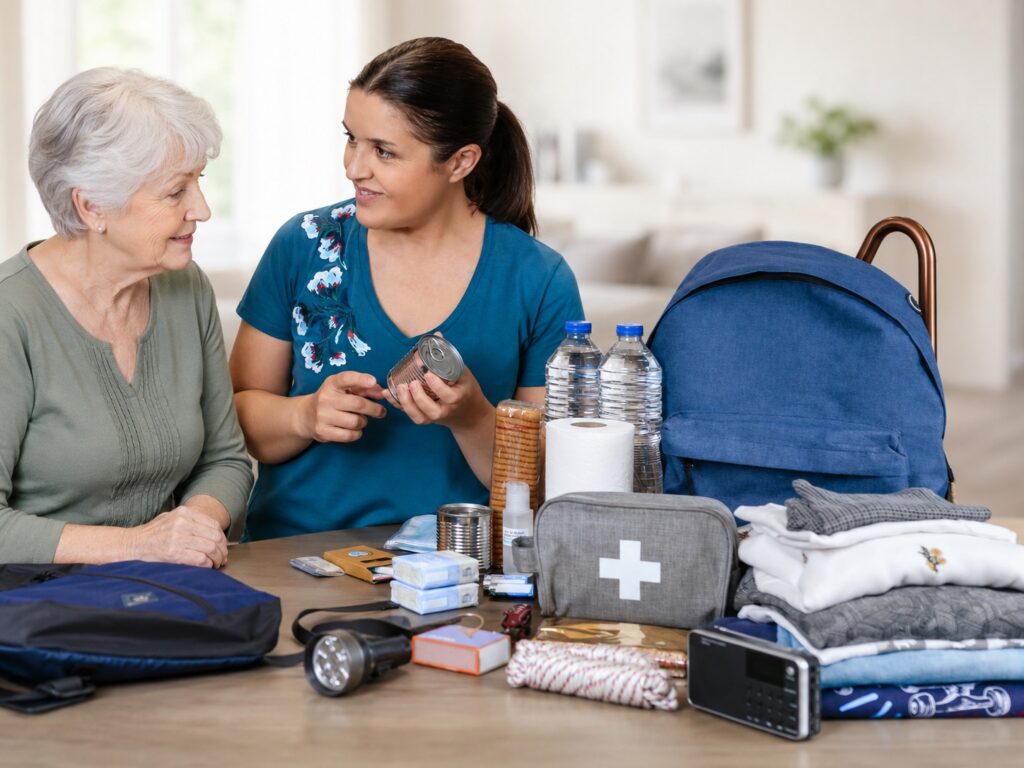
Include the basics:
- Water and easy-to-prepare food
- Flashlights and extra batteries
- Portable phone chargers
- First aid supplies
- Cash
- Important documents in a waterproof bag
- Battery-powered radio
Then add the senior-specific items families often forget:
- Glasses, hearing aids, dentures, and cleaning supplies
- Walker, cane, wheelchair, or transfer equipment
- Extra clothing, blankets, and non-slip shoes
- Comfort items that reduce anxiety, such as a favorite blanket, book, puzzle, or familiar snacks
- Written care instructions if multiple family members or caregivers may need to step in
- Backup hygiene supplies and toiletries that are easy to access
If your loved one has memory loss, keep labeled instructions in plain sight and simplify the environment as much as possible. Confusion tends to rise when routines change.
3. Have a Real Plan for Power Outages
For many seniors, the biggest issue is not the storm itself. It’s what happens after the storm when the power is out for hours or days.
Power outages can affect:
- refrigerated medications
- oxygen concentrators and other medical devices
- air conditioning in extreme Florida heat
- lighting and fall risk
- the ability to charge phones and communicate with family
Ask these questions now:
- Does my loved one use any electricity-dependent medical equipment?
- If the power goes out, how long can they safely remain at home?
- Do we have backup power options or an alternate safe location?
- If they live alone, who will physically check on them?
- If the home gets too hot, where will they go?
If your loved one depends on medical equipment, contact the utility company and local emergency management office ahead of time to ask about medical priority programs, special needs planning, and local resources. Families should not be trying to solve that in the middle of a storm warning.
4. Decide in Advance: Shelter in Place or Evacuate?
One of the most stressful parts of storm season is trying to make big decisions under pressure. If your loved one may need help evacuating, that plan should be made before a storm is approaching.
Talk through:
- Where will they go if they need to leave home?
- Who will drive them?
- What mobility support will be needed?
- What supplies need to be packed immediately?
- Is the destination accessible and safe for their medical needs?
- If they receive care at home, what happens to that care plan if they relocate?
Do not assume a loved one will be able to “figure it out” quickly if a storm escalates. Evacuation is much harder for older adults with mobility limitations, chronic illness, or dementia. The plan needs to be simple, realistic, and written down.
5. Create a Personal Support Network Before You Need One
Storm prep should never depend on one exhausted family member trying to handle everything alone.
Create a small support network that includes:
- close family members
- a trusted neighbor
- the primary caregiver
- the home care team
- physicians if needed
- the pharmacy
- a local emergency contact nearby
Everyone should know:
- where the emergency kit is
- what medications are needed
- whether the plan is to stay or evacuate
- who is checking on your loved one before and after the storm
- how to access the home if needed
This matters even more for adult children who live out of town. If you are trying to coordinate care for a parent in Florida from another city or state, having a trusted care team on the ground makes an enormous difference.
6. Prepare the Home for Safety After the Storm, Too
Preparation is not just about getting through the storm. It is also about what happens when your loved one is back to normal routines, but the home environment is not.
After a storm, older adults may be at higher risk because of:
- slippery floors or water intrusion
- spoiled food left in the refrigerator
- poor lighting
- trip hazards from clutter or cleanup
- heat exposure if the AC is still out
- stress, fatigue, or confusion
Once it’s safe, check:
- Is the home cool enough?
- Is food still safe to eat?
- Are walkways dry and clear?
- Are medications still stored properly?
- Does your loved one seem more weak, confused, or unsteady than usual?
Sometimes the danger shows up after the storm, not during it.
How AstraCare Helps Families Prepare Before Storms Hit
Storm preparation gets much easier when a family is not carrying it alone.
At AstraCare, we help families think through the practical realities of caring for an older loved one during hurricane and storm season. That may include helping families organize care needs, prepare the home, monitor a loved one’s condition, or simply make sure someone reliable is there when routines are disrupted.
Our caregivers can help support seniors before and after a storm by assisting with:
- organizing medications and essential supplies
- helping prepare meals and stock the home
- monitoring safety and well-being
- assisting with mobility and fall prevention
- providing companionship and reassurance during stressful disruptions
- giving families peace of mind that someone is checking in and paying attention
For many families, the biggest relief is knowing they do not have to manage every detail alone, especially if they live far away or are juggling work, kids, and caregiving at the same time.
The Best Storm Plan Is the One You Make Before You’re Panicking
No one can control the weather. But families can reduce the chaos that often comes with it.
If you have an aging parent or loved one at home, storm preparation should go beyond batteries and bottled water. It should include a plan for medications, mobility, power outages, emotional support, and what happens if normal routines fall apart for a few days.
That kind of preparation does more than improve safety. It reduces worry, last-minute scrambling, and the fear of not knowing whether your loved one will be okay.
If you’d like help preparing a loved one for storm season, AstraCare is here to help. As a local business, AstraCare caregivers as experts in dealing with the realities of senior care in Palm Beach County and Broward County. We support families with thoughtful in-home care before and after a storm, so you can feel more confident that your loved one is safe, supported, and not facing it alone.
Call us at (844) 960-0599 or contact us online to talk about your family’s needs and learn how we can help your loved one stay safe.
AstraCare | Compassionate In-Home Care in Broward and Palm Beach
Your partner in health, safety, and everyday peace of mind.